Water Heater Not Heating? A Singapore Homeowner's Troubleshooting Guide
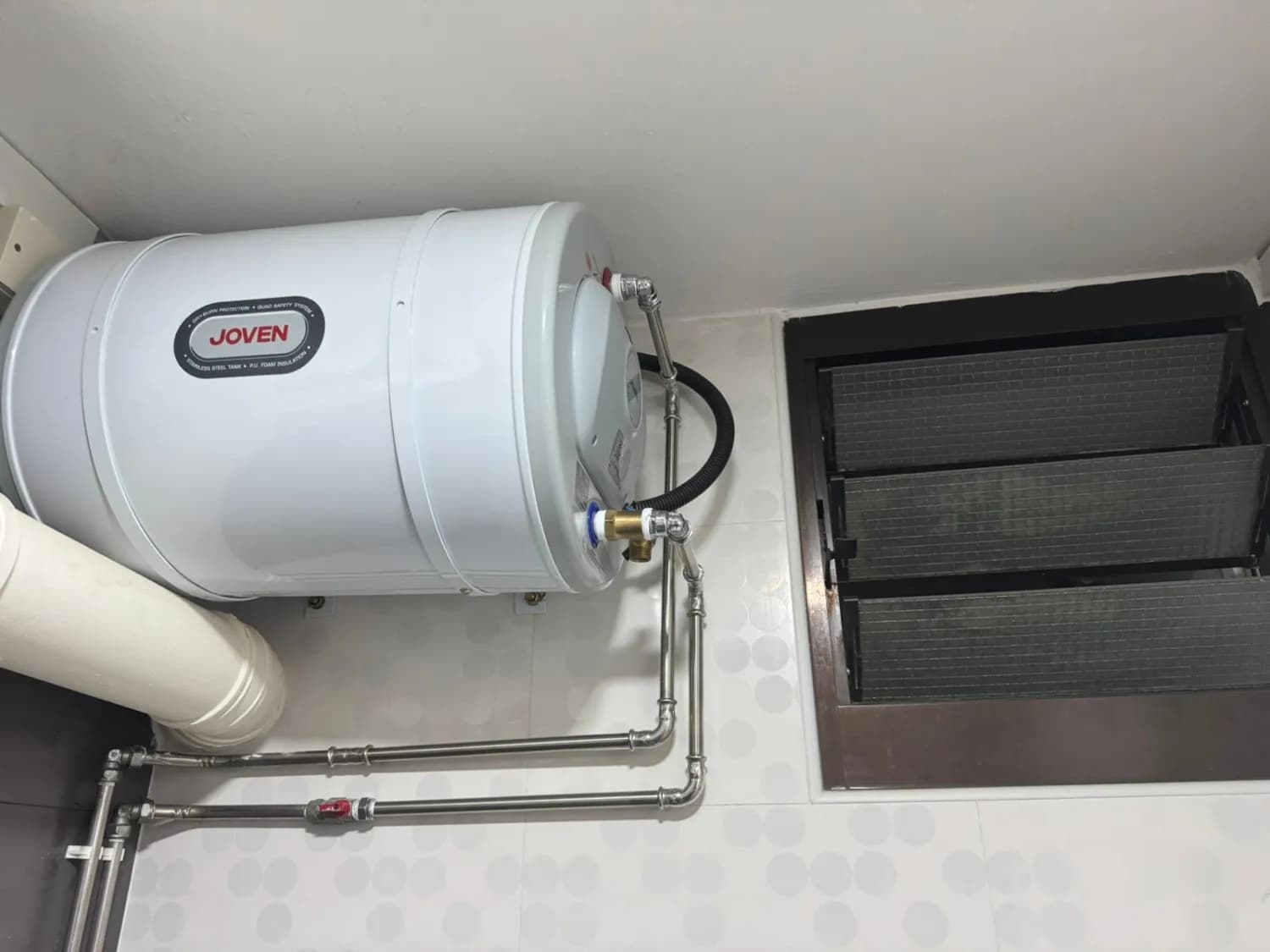
There are few worse ways to start the day than stepping into a cold shower. In Singapore, almost every home relies on an electric water heater, either a storage heater (a tank, usually mounted high on the bathroom wall or in the ceiling) or an instant heater (a compact unit that heats water as it flows). When either stops working, the cause is often simpler than you think. Sometimes, though, it's a sign of a fault that needs a professional, especially because water and electricity are a dangerous combination.
This guide walks you through safe checks you can do yourself, explains the most common faults for each heater type, and helps you decide whether to repair or replace.
First: Know Which Type of Heater You Have
Storage water heater | Instant water heater | |
|---|---|---|
How it works | Heats and stores water in an insulated tank | Heats water only while it flows through |
Where you'll find it | Wall-mounted or above the false ceiling | Beside the shower, usually a single-point unit |
Hot water supply | Can serve multiple points, limited by tank size | Unlimited, but usually one point at a time |
Typical sign of trouble | Hot water runs out quickly, or no heat at all | Water lukewarm, or heater doesn't switch on |
Step-by-Step Checks You Can Do Safely
Work through these checks in order. Do not open the heater casing or touch any wiring: these checks are about switches, settings and observation only.
1. Check the heater switch
Many Singapore homes have a dedicated water heater switch outside the bathroom, often with an indicator light. It's surprisingly easy for someone to switch it off by mistake. If there's an indicator light on the heater itself, check whether it's on.
2. Check your distribution board for a tripped breaker
Open your DB box and look for a tripped switch, especially the RCCB (residual current circuit breaker, the safety switch that cuts power when it detects current leaking to earth). If it has tripped, you can reset it once.
Important: If the RCCB trips again when the water heater is switched on, stop. Repeated tripping usually means current is leaking somewhere it shouldn't, often from a failing heating element or water getting into the electrical parts. Leave the heater switched off and have it checked.
3. Check the temperature setting
Some storage heaters have an external temperature knob, and instant heaters usually have a dial or buttons. Make sure it hasn't been turned down to the lowest setting.
4. For storage heaters: give it time
A storage heater needs time to heat a full tank. If it was switched off overnight, or several people have showered back-to-back, the tank may simply be empty of hot water. Leave it on and check again later. If the water is still cold after a reasonable wait, there's a fault.
5. For instant heaters: check the water pressure
Instant heaters only switch on when they detect enough water flow. If your shower head is clogged with limescale, or the flow is turned very low, the heater may not activate or may cycle on and off. Try opening the tap more fully and cleaning the shower head.
The Most Common Water Heater Faults
Symptom | Likely cause | Usually fixable? |
|---|---|---|
No heat at all, power is on | Failed heating element or thermostat | Often yes, with a replacement part |
RCCB trips when the heater runs | Element earth leakage or moisture in the wiring | Depends on the cause, so needs inspection |
Water lukewarm, never really hot | Thermostat fault, partly failed element, or sediment build-up | Often yes |
Hot water runs out much faster than before | Sediment taking up tank space, or an element failing | Sometimes |
Water dripping from the tank body | Corroded or leaking tank | Usually means replacement |
Rusty or discoloured hot water | Corrosion inside the tank or pipes | Needs inspection |
Instant heater flickers on and off | Low water flow or a faulty flow sensor | Often yes |
Warning Signs You Should Never Ignore
Switch the heater off at the switch and call a professional if you notice any of these:
A burning smell or scorch marks near the heater or its switch.
A tingling sensation when touching the tap or shower set.
The RCCB tripping repeatedly.
Water leaking from the tank or dripping onto electrical fittings.
Loud banging or popping sounds from a storage tank.
The pressure relief valve discharging constantly.
These are safety issues, not just comfort issues. Don't keep using the heater "until the weekend".
Repair or Replace?
Not every fault means a new heater. As a general guide:
Repair usually makes sense when
The heater is relatively young and the tank is in good condition.
The fault is a single part, such as a heating element, thermostat or indicator switch.
The problem is with the inlet or outlet connections rather than the unit itself.
Replacement usually makes more sense when
The tank itself is leaking. A corroded tank can't be patched reliably.
The heater is old and has needed several repairs already.
Your household has grown and the current tank size no longer meets your needs.
Replacement parts are no longer available for your model.
A good technician should explain which option makes sense for your heater and why, rather than pushing a replacement by default.
Things to Consider When Installing a New Heater
Capacity: choose a tank size based on how many people shower at peak times, not just household size.
Location and wall strength: a full storage tank is heavy. It must be mounted on a wall or support that can safely carry its weight.
Safety valves: storage heaters need a properly fitted pressure relief valve, with the discharge directed safely.
Electrical point: the heater should have its own suitably rated switch and circuit. Electrical wiring work should be carried out by a licensed electrician.
Instant vs storage: if you only need hot water at one shower and want to save space, an instant heater may suit you better.
Why Some Heaters Fail Sooner Than Others
Two identical heaters can have very different lifespans depending on how and where they're installed. The most common reasons we see for early failure are:
Poor installation: a missing or wrongly fitted pressure relief valve, loose connections, or an unsuitable electrical point puts constant stress on the unit.
Moisture around electrical parts: heaters installed where shower spray or ceiling condensation reaches the wiring are far more likely to trip and corrode.
Heavy daily demand on a small tank: an undersized heater that's emptied and reheated many times a day wears out its element faster.
Ignored early warnings: occasional tripping or slowly weakening heat are often the first signs of an element failing. Fixing it early can prevent damage to other parts.
If you're replacing a heater that failed early, it's worth asking why. Repeating the same installation mistake often means repeating the same breakdown.
Simple Habits That Extend Your Heater's Life
Don't set the temperature higher than you need. It wastes energy and stresses the element.
Clean shower heads regularly to keep water flow healthy, especially for instant heaters.
Pay attention to early signs: lukewarm water, slower heating, or occasional tripping are worth checking before they become a breakdown.
Quick Answers
Can I reset my water heater myself?
You can reset a tripped breaker once. If it trips again, leave it off. That's the circuit protecting you from a fault.
Why is my hot water running out so quickly?
Usually sediment build-up, a failing element, or a tank that's simply too small for current usage.
Get Your Hot Water Back
If your checks haven't solved the problem, or you've seen any of the warning signs above, HTR Engineering can inspect your heater and advise whether a repair or replacement makes sense. Learn more about our Water Heater Installation & Repair service or contact us to arrange a visit.
Found this helpful? Share it.
Need a Hand With This?
- Plumbing Services
Reliable plumbing services in Singapore for leaks, chokes, taps, toilets and water heaters. One call covers most household plumbing jobs in HDB flats, condos and landed homes.
- Water Heater Installation & Repair
Professional water heater installation and repair in Singapore. We replace old storage heaters, install instant heaters and fix no hot water, leaks and tripping issues.
- Pipe Leakage Repair
Fast pipe leakage repair in Singapore for leaking inlet pipes, concealed pipes, joints and fittings. We find the source and fix it properly to stop water damage.
- Kitchen Sink Choke
Quick kitchen sink choke clearing in Singapore. We remove grease, food waste and blockages in the sink trap and pipes so your sink drains freely again.
- Toilet Bowl Choke
Fast toilet bowl choke clearing in Singapore. We clear blocked toilets caused by tissue, wipes and foreign objects — hygienically and without damaging the bowl.
- Toilet Leakage Repair
Fast toilet leakage repair in Singapore. We fix running cisterns, leaking flush valves, base leaks and inlet leaks to save water and protect your floor.